
Case File 002: The High Times Magazine Documentary that went Up in Smoke
Or: What Was Hollywood Smoking?

How the fuck does a documentary about High Times Magazine with the former editor involved, Marc Levin directing, me producing, Rough House and Danny McBride behind it, CAA taking it out, HBO interested, weed becoming legal all over America, and our entire culture suddenly smelling like a dispensary lobby not get made?
I still don’t know. What was Hollywood smoking? Obviously shitty weed.
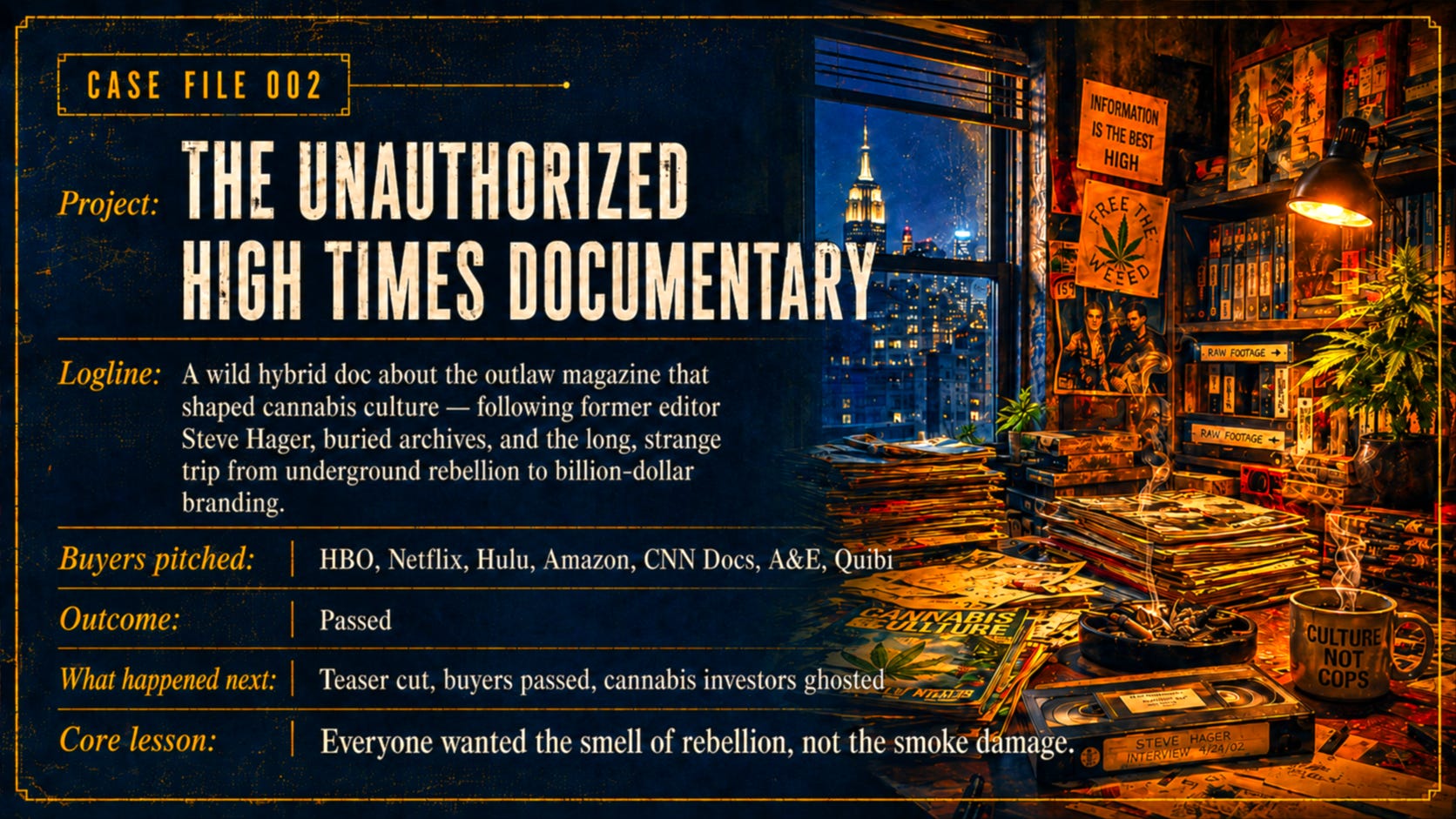
Because this wasn’t really about marijuana. It was about America, underground newspapers, The War on Drugs, Hippies, Outlaw journalists, the Feds and Capitalism, Legalization, Commodification in the billions of dollars, the moment when the thing that we used to get locked up in jail for became a lifestyle brand sold by venture capitalists in fleece vests and all of it because of a magazine called High Times.
High Times Magazine changed the culture and changed the country.
Peep the teaser and tell me you wouldn’t want to watch this on HBO (or any other network)
The First Spark: Marc Levin in Chelsea Piers
As mentioned in Case File 001, when I was in NYC pitching River Styx to HBO, I stayed in town a few extra days to network. One of those meetings was with legendary documentary filmmaker Marc Levin, who was also one of my early mentors.
Marc wasn’t just another director to me. I met him through the actor Mark Webber when I was directing my first feature Bomb the System in 2002. He made Whiteboyz, a highly underrated indie film that deserves to be revisited, and Bangin’ in Little Rock, which blew my head open when I first saw it late at night on HBO in high school and made me want to become a documentary filmmaker. So when I was starting this company with Rough House, of course I wanted Marc in the mix.
Little did I know, Marc already had an idea tailored for me and Rough House.
I went up to Marc’s office at Chelsea Pier. Back in my early 20’s, when I was first coming up, Marc let me use an office there for free. I was a broke indie filmmaker trying to stay afloat and would walk from my apartment on 28th and 2nd Ave to his office directly crosstown - a full 2-mile walk from the East River to the Hudson River. Alex Gibney was also in the same office, as were a bunch of other NYC indie filmmakers, all of us still living in that weird post-9/11, pre-streaming version of the city where documentary people could somehow have huge offices on the West Side but still feel broke.
The Blowback office circa 2005 was a legendary indie filmmaker hang-out spot. Hard drives stacked on desks, festival laurels taped to walls, half-finished cuts playing in edit rooms, people smoking cigs in the stairwell, everyone hustling for grants, foreign pre-sales, Sundance dreams, whatever would keep the lights on. And the parties were dope: Keggers. Ragers. Filmmakers, actors, editors, downtown weirdos, cheap beer, cheaper weed, and the feeling that somehow all of us were either about to make it or completely ruin our lives trying.
Then Marc dropped the idea.
High Times.
Not a vague idea. Not “maybe there’s something here.” A real fucking movie. Former High Times editor Steve Hager happened to be Marc’s sister’s neighbor or something random like that and Marc had visited him months prior and peeped the insane archive of High Times magazines, photos and footage in the apartment and heard some of Steve’s wild stories. Marc had also heard some people he knew were pitching McBride on becoming part of a ‘weed brand’ in some way so the marriage of Rough House and Marc’s company made perfect sense. On top of that, Marc was in production on multiple projects with HBO and this felt like an obvious winner for them too.
Oh shit. This is it. This is the one.
My heart started racing like I was back in high school taking a gravity bong hit out of my friend’s kitchen sink and realizing, way too late, that I had made a terrible mistake.
The Wizard in the Archive Cave
Steve Hager was a character out of a lost Thomas Pynchon novel. He described himself as “The Ken Burns of the Counterculture,” “The Johnny Appleseed of 420,” “The Billy Martin of High Times,” and “The Creator of Cannabis Cup.” And somehow, none of that felt like overselling it.
He wasn’t just a subject for one movie. He could have carried an entire series. Multiple seasons. This was a guy who had edited High Times, helped push 420 into the culture, created the Cannabis Cup, written the original story that became the seminal hip-hop film Beat Street (one of my favorite movies growing up) and also wrote “Heritage of Stone,” a sprawling High Times investigation into the assassination of JFK that became one of those legendary pre-internet / early-internet conspiracy texts passed around by people who thought the official story was bullshit.
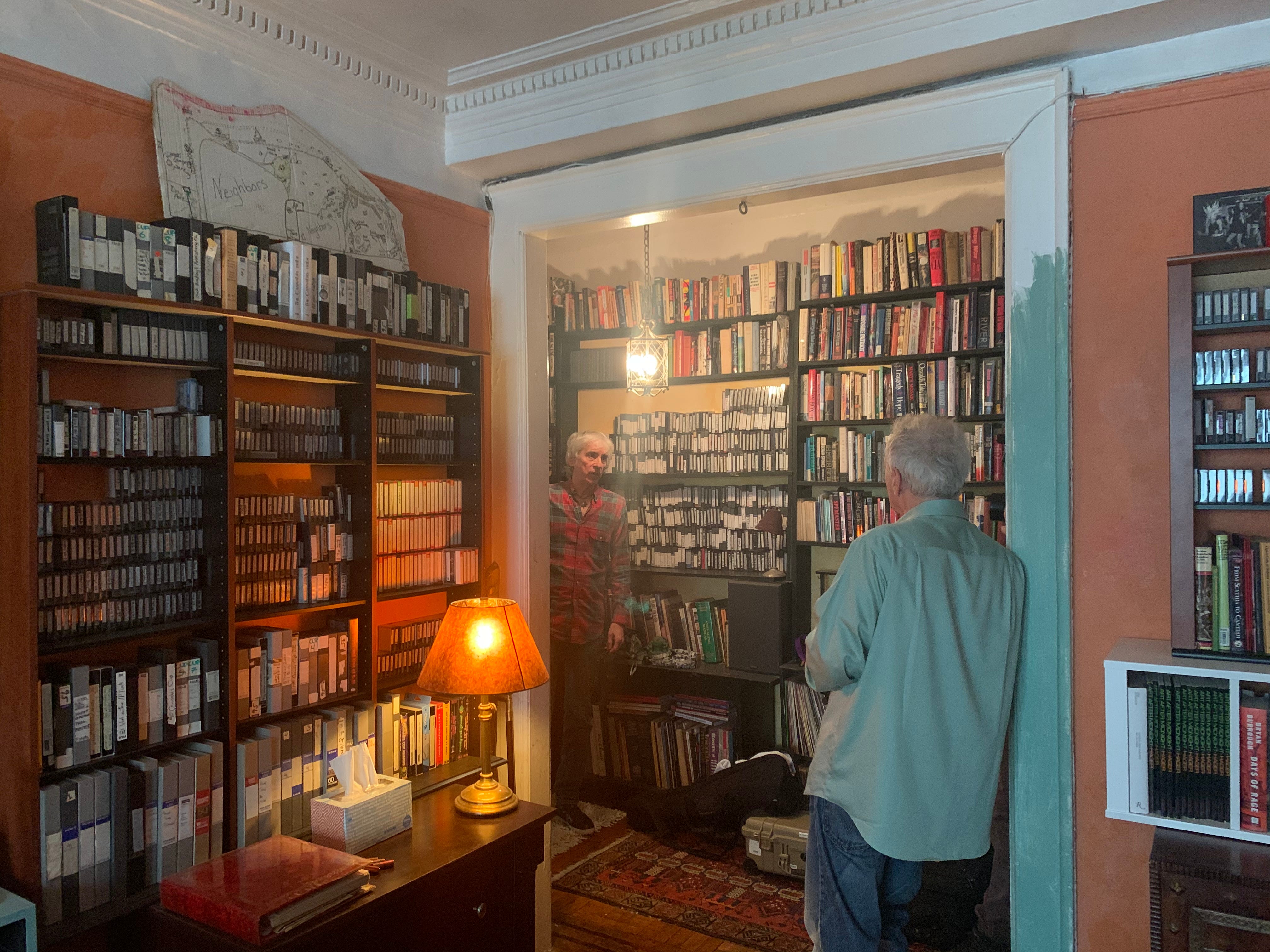
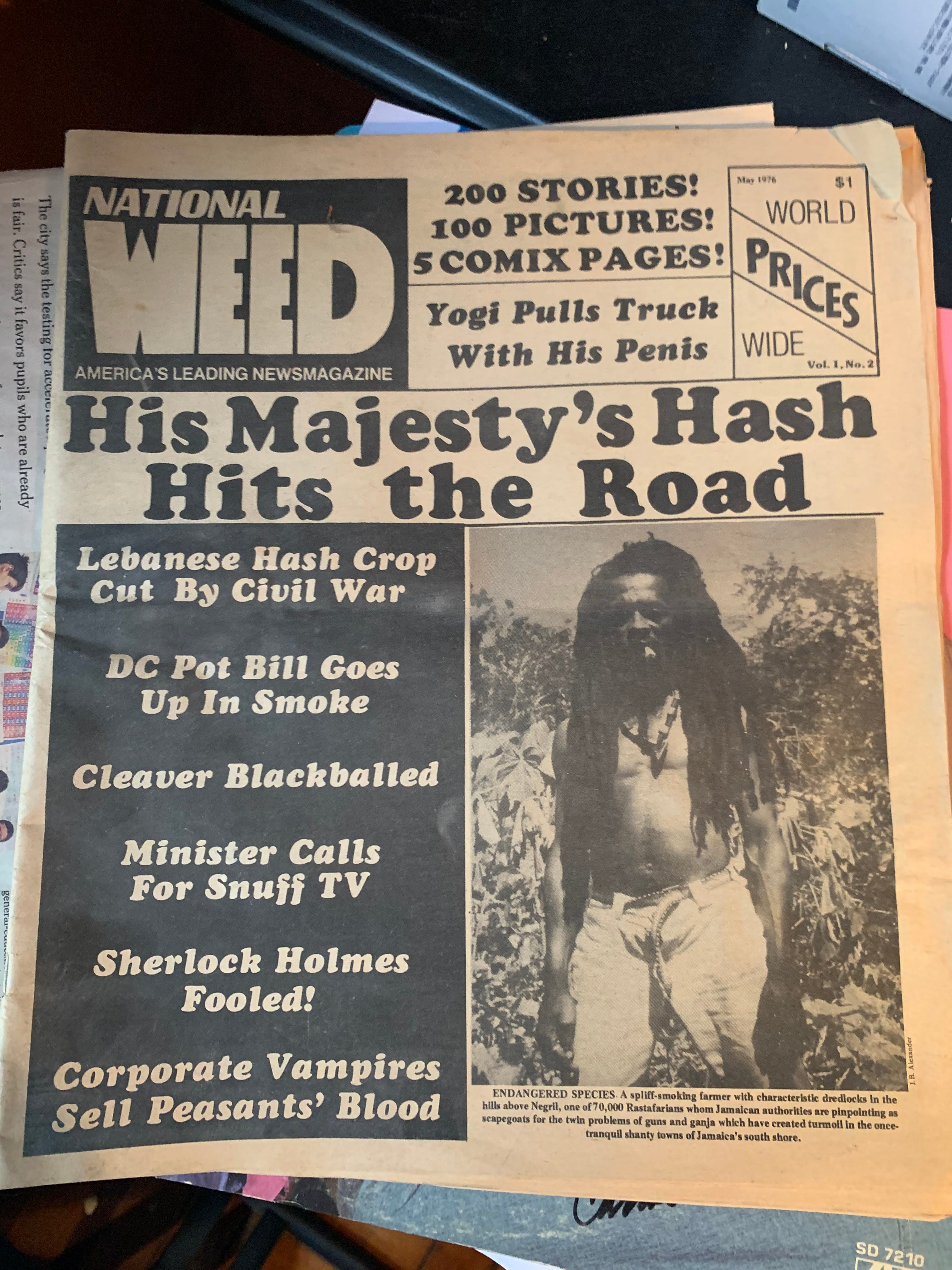
His giant rent-controlled apartment in Manhattan was basically a movie set. The walls were lined with old issues of High Times, VHS tapes, and archival gold. There was a Phase 2 throw-up painted on his bathroom wall from 1982. Steve had lived through underground newspapers, early hip-hop, the birth of 420 culture, the Cannabis Cup, DEA raids, internal magazine wars, the death of High Times founder Tom Forçade, and decades of American paranoia, idealism, smoke, commerce, and betrayal.
It was like entering Willy Wonka’s factory, except instead of candy, it was weed, VHS tapes, conspiracy theories, and the entire lost nervous system of the counterculture.
Steve wasn’t an interview. Steve was a movie.
What the Movie Was
The idea was never to make a straight-ahead, archive-driven history lesson. That would have been too polite for High Times. The whole point was to make something as wild and unstable as the magazine itself part documentary, part narrative, part stoner fever dream. We wanted to use the Rough House universe as a weapon and cast actors like Seth Rogen, John Goodman, Jamie Lee Curtis, and whoever else we could pull into this insane black-box reenactment machine.
The deck framed High Times as more than a magazine. It was an outlaw publication that started in 1974, survived almost half a century, pushed cultural boundaries, challenged the War on Drugs, and helped pave the road to legalization. It wasn’t just covering the counterculture. In a lot of ways, it was building it.
The movie had a narrative engine too.
A young millennial legal weed tycoon wants to license the High Times brand and build an empire around it: coffee shops, dispensaries, clothing, apps, signature strains, the whole modern cannabis lifestyle machine. But before he can monetize the myth, he has to figure out who actually owns it. That search leads him to Steve Hager, the reclusive former editor surrounded by the archive. And once Steve opens the door, the movie detonates backward through time, with staged reenactments bringing the whole deranged history of High Times back to life.
Potential Reenactments
The first High Times issue selling out.
The shift from underground press to national phenomenon.
The magazine drifting into cocaine-era madness.
Steve Hager dragging it back to cannabis.
The invention of the Cannabis Cup.
A daily 4:20 ceremony in the office.
The DEA launching Operation Green Merchant, raiding hydroponic stores in 46 states, arresting 119 people, and treating the magazine, seed sellers, grow shops, and pot journalists (including Hager) like a national criminal conspiracy.
The movie’s big theme: the counterculture became the marketplace.
This wasn’t a weed documentary. It was a documentary about how rebellion becomes product. a perfect story about America eating the counterculture and selling it back to us in branded fucking packaging.
The Shoot: Three Guys and the Counterculture Oracle
I flew back to do a proper shoot with Steve in New York in March 2020, right as the world was beginning to fall apart. Coronavirus was in the air, but nobody totally knew what it meant yet. I asked Dan if they wanted to cancel the shoot. Dan wrote back: “Corona or not we will be here.”
The shoot was tiny - not just because of COVID but because we had little to no development budget. Just me, Marc, and Dan. Me and Dan shooting. Marc asking questions. Steve with stories straight up pouring out of him.
Here are my notes from the shoot that day:
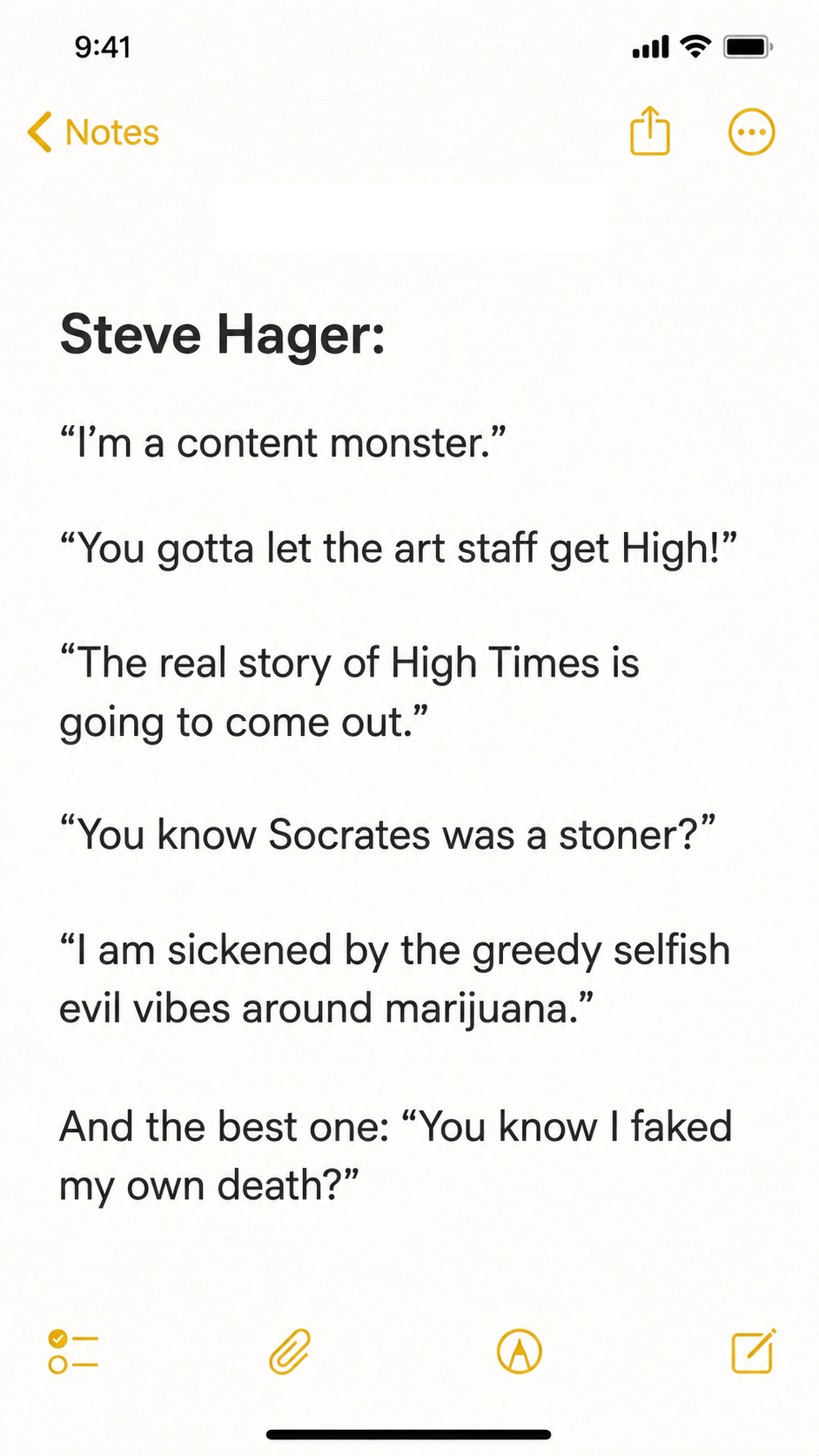
Every few minutes Steve would say something that sounded insane, and then five minutes later it would start to sound like the entire history of America.
It was electric. We were filming a guy who believed the true history of weed had been buried and he was finally ready to unload it. It was like he’d been waiting for us to show up at his doorstep for years. He was as stoked as we were.

The Teaser: We Had the Good Shit
After the shoot I got back to LA with the footage on a hard drive. I hired Jesse Atlas to cut the teaser. Jesse was a dad from my kids preschool. We had bonded at the playground about indie film and he had pitched himself as an ace teaser editor. Jesse would go on to cut a ton of other teasers for me, including the one that helped get Telemarketers sold.
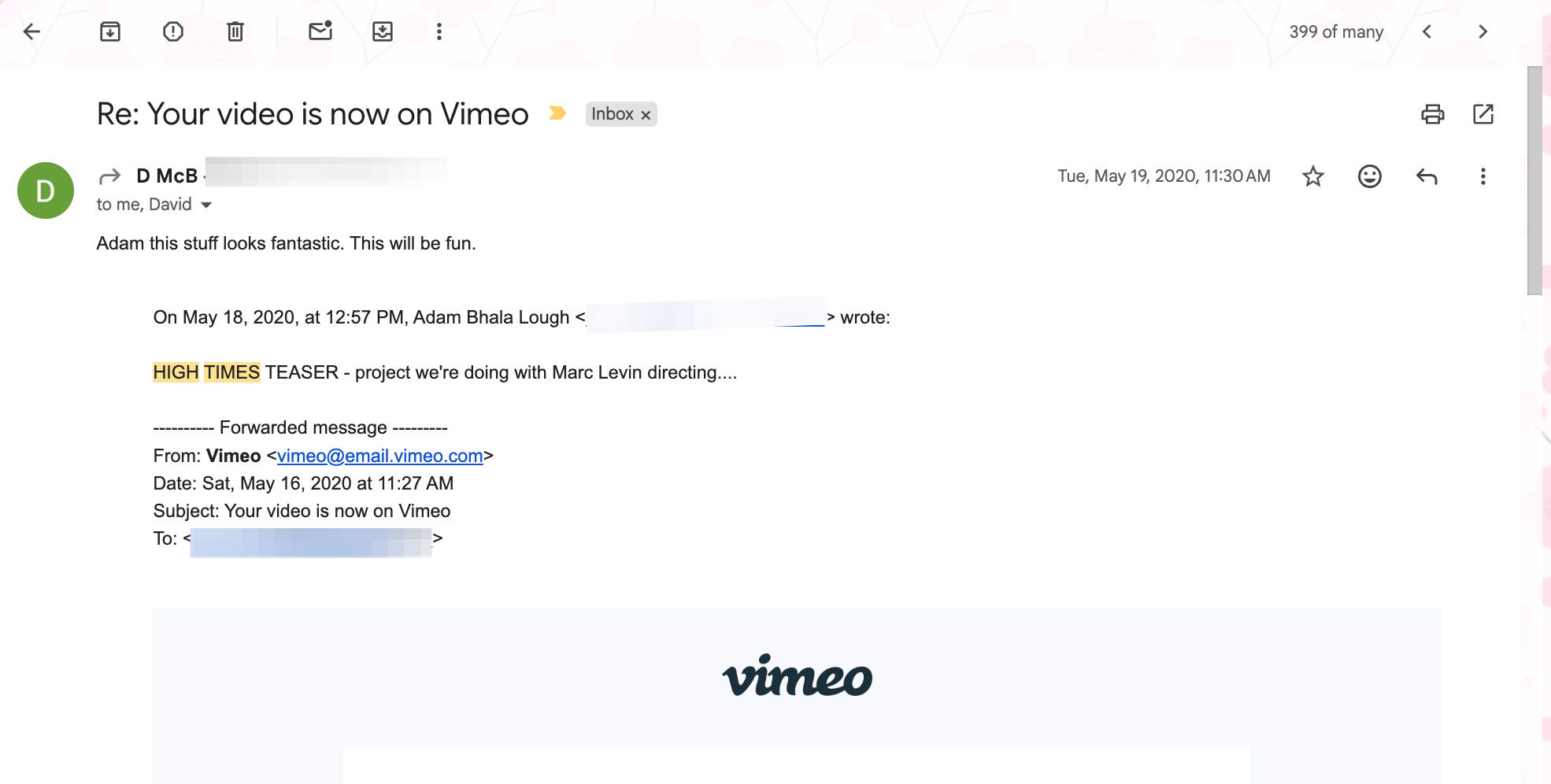
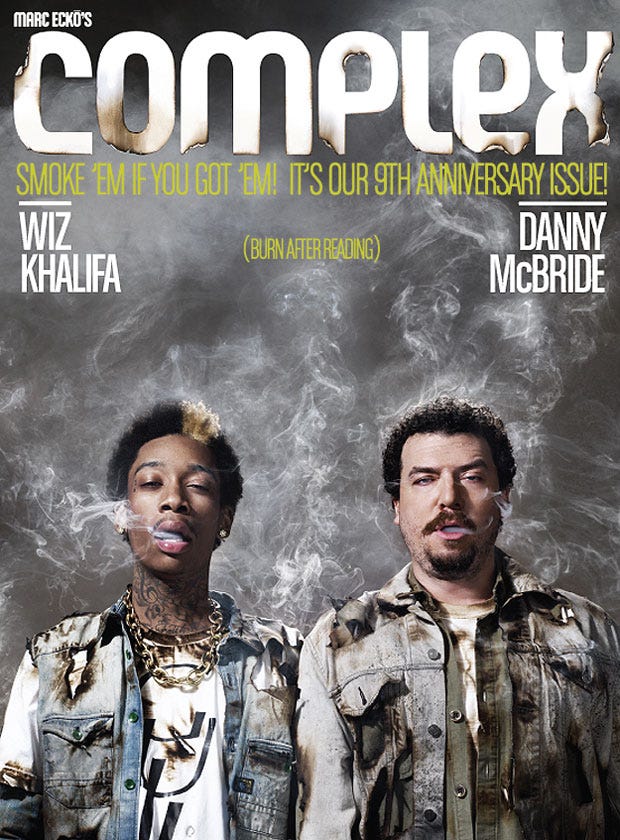
Dan and Marc wrote the deck back in NYC. Marc created logs of the Hager interview. We went back and forth on the materials for a month or so before we had it done and I shared it with the Rough House guys. That was a mini-climax moment in itself. The guys loved it. McBride wrote back, “Adam, this stuff looks fantastic. This will be fun.” I was on cloud 9.
At the moment this thing felt real. It had a director (legendary). It had incredible access, sick archive, Rough House enthusiasm, a dope teaser, a decent deck, a marketable subject. The train was leaving the station.
HBO: The Slow Burn Out
Marc pitched the project directly to Nancy Abraham, who ran HBO Documentary. He had a long relationship with her and was used to pitching her on his own, so it made sense. He didn’t need me or Brandon James from Rough House on the call. I trusted his process even though it wasn’t my preferred method of doing things.
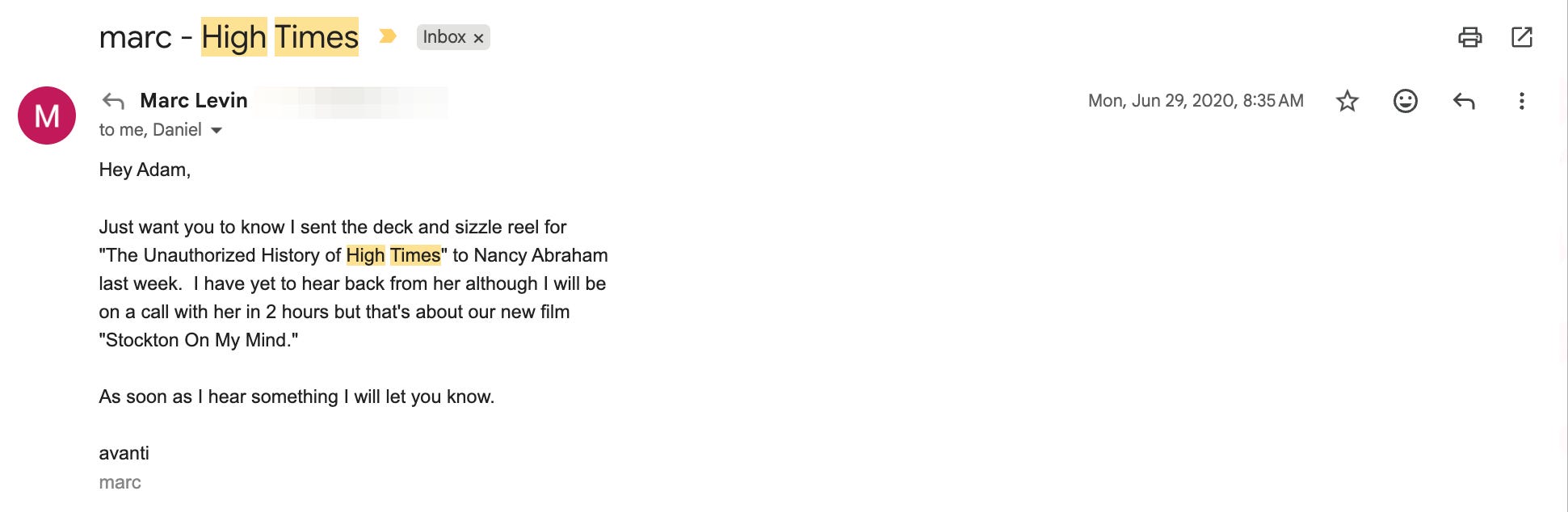
At first, there were encouraging signs. Marc told me Nancy liked the idea and was interested in finding something to do with me and Rough House. The only catch was that HBO seemed to want a development step before committing to the full film. Marc suggested I reach out to Sara, Nancy’s VP, who I had already pitched River Styx to and had become friendly with.
So I wrote to Sara and explained what we needed: about $50K in development money to do more research, build out the materials, and shoot a test reenactment with actors. The ask felt reasonable. We weren’t saying, “Give us $3 million and trust us.” We were saying, “Help us develop this crazy, exciting thing properly.”
Then nothing.
Months went by.
Eventually, in August, we heard HBO was officially passing. The message was that High Times was “not a good fit for their upcoming slate.”
I have heard every version of this sentence. Not right for the slate. Not right for the remit. Not right for the current mandate. It’s never ‘bad.’ It’s never ‘we don’t like it.’ It’s always some invisible calendar, some mysterious mandate, some ghostly corporate mood ring that only executives can see, one of those phrases that sounds professional but means absolutely nothing. It is the industry’s version of weed vape disappearing into air without a trace.
CAA Takes It Out: Everybody Likes It, But…
So our agent Matt Chazen at CAA goes out wide with it. The list was strong: Hulu, Netflix, A&E, Quibi, Amazon, CNN Docs, with Comedy Central and Vice as possible tier-two buyers. This is not us begging people one by one. This is a real marketplace push.
Then the passes start rolling in…
Amazon: “great sizzle,” “very cool movie,” but not the kind of thing that makes sense as a pre-buy.
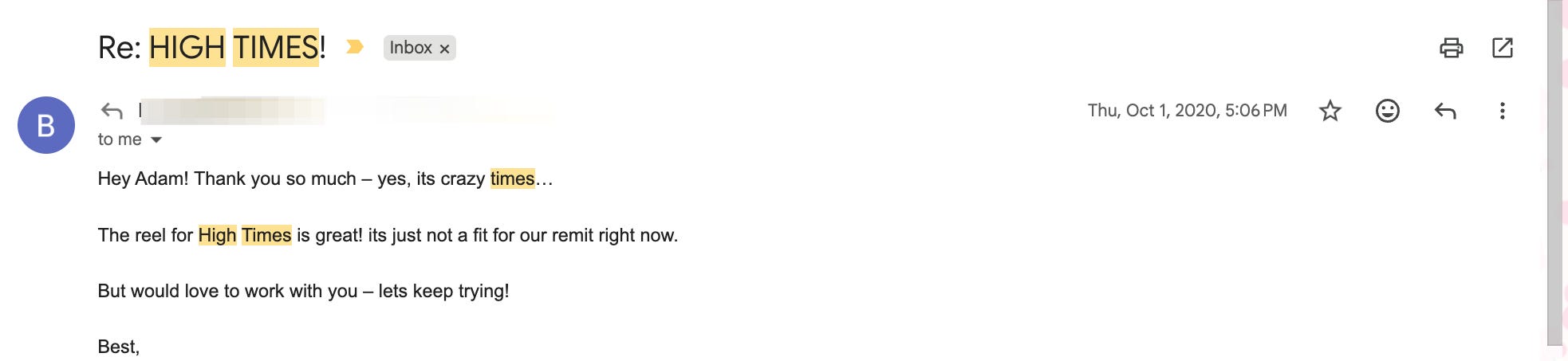
Hulu: “The reel is great,” but “just not a fit for our remit right now.”
CNN Docs: “a great time capsule,” but “an incredibly tough sell for our audience.”

Another buyer: “Really fun tape,” “fun rabbit hole,” but “given our limited slate this one is not for us,” and they avoid “more historical type films.”
A&E likes it but needs a co-financing model.
Netflix is still out there for a minute. We’re holding for Netflix. Then A&E passes. Netflix doesn’t save it by December.
Dead.
Happy Holidays. Here’s to 2021.
The Cannabis Investor Detour
In early 2021, the buyers had passed, so we started looking to the cannabis community for money.
If Hollywood wont fund a High Times documentary, surely some weed money will.
Legal cannabis is booming and everyone from Mike Tyson to Willie Nelson have their own weed brand. Surely some rich legal weed company owner wants to help tell the story of the magazine that helped create the culture as now we know it.
Those meetings had a strange energy. There were people with money but no taste, brands but no culture, investors who wanted to be near Hollywood but didn’t seem to understand what it actually costs to make a real film.
Everyone wanted to talk about “content” and “branding” and “the culture,” but nobody seemed to understand the culture and the value of Steve Hager having boxes of it sitting in his apartment.
Some of the follow-up emails were even weirder.
Dispensary chain owners I had met with in LA would write back asking questions that made it seem like they had completely forgotten the meeting we had just had, as if they had been so stoned while we were pitching that the entire conversation had evaporated before I got to my car.
We went out to the cannabis community and found we were actually pitching the cannabis industry which is a very different thing.
Like Steve Hager said on that fabled shoot day: “Cannabis has gone mainstream now and the whole counterculture has been severed.”
So why didn’t it happen?
There’s not one clean answer in my opinion.
Maybe it was too historical.
Maybe it was too weed-focused.
Maybe it was too funny for doc buyers and too doc for comedy buyers.
Maybe buyers loved the idea of counterculture more than actual counterculture.
Maybe,. As one friend put it, “everyone wanted the smell of rebellion but not the smoke damage.” (Whatever the fuck that means)
The Ending: The One That Should Have Gotten Made
It’s mid-2021 and we’re back in Steve Hager’s apartment. The archive is still sitting there waiting for someone to dupe it, put it on a hard drive and cut a fucking documentary. The old magazines are still there, the ghost of Tom Forcade, the Cannabis Cup trophies on the wall. The true American story of a plant going from contraband to commodity is still sitting there.
The High Times documentary should have gotten made. It had everything Hollywood claims to want: access, IP, archive, comedy, crime, politics, music, celebrity, a legendary director, a famous producing team, and a subject that was once rebellious but now totally mainstream.
But somehow, everybody looked at the smoke and said they couldn’t see the fire. So the project died. The archive stayed in the apartment. The buyers moved on to whatever their slate told them to want next. And the counterculture, once again, got swallowed by the people who claimed they wanted to celebrate it.
Maybe one day someone will make the definitive High Times documentary. I hope they do. But we had it. For one brief, beautiful, stupid moment, we fucking had it.
POSTSCRIPT: HIGH TIMES GETS REVIVED
And because this story refuses to die, High Times has now been revived.
In 2025, Josh Kesselman, the founder of RAW Rolling Papers, purchased High Times, along with the Cannabis Cup events and related assets, in an all-cash deal reported at $3.5 million. The magazine had entered receivership, which means the thing we were trying to make a movie about (the rise, fall, debt, mythology, and possible resurrection of High Times) literally kept becoming more of a movie after our movie died.
Kesselman has said the plan is to relaunch the print magazine as limited-run collectible editions, bring back the Cannabis Cup (which Steve Hager created lest we forget), and rebuild the digital platform around cannabis podcasts, experts, and community voices. Which, honestly, sounds positive. It sounds like maybe High Times is finally back in the hands of somebody who actually loves the culture and not just the brand. Time will tell.
But it also makes the whole Hollywood pass even funnier to me. We were sitting there in 2020 trying to tell people this story had another act coming. The magazine was too weird, too important, too loaded with history to simply vanish. And now here we are. High Times is being resurrected for $3.5 million, which is basically what we were trying to raise to make the documentary in the first place.
VIDEO: Steve Hager tells us the origin of the term 420
Watch my hour long selects from the interview.
NEXT CASE FILE:
A documentary about a seminal platinum-selling ’90s music group that I was set to direct.
We had access, music rights and legendary names behind it. On paper, it looked like a layup.
It was not a layup.
It was a Dikembe Mutombo block that put me on my ass.
This one gets messy.
Because this series deals with real projects, real people, and real companies, here’s the boring but necessary note:
Almost Greenlit is written from my personal perspective and memory as a filmmaker and producer involved in the development and pitching of these projects. It is not intended to be a definitive account of what any buyer, executive, company, filmmaker, subject, agent, financier, distributor, or other participant thought, intended, or decided at the time.
Where I describe meetings, pitches, passes, development history, business decisions, or creative choices, I am describing my own recollection, interpretation, and opinion unless otherwise stated. Any quoted material is included from my own correspondence, public materials, interviews, or with permission where appropriate.
Materials such as trailers, teasers, pitch decks, posters, stills, artwork, clips, screenshots, and other project-related assets may be included for commentary, criticism, historical context, archival reference, and educational purposes. I do not claim ownership of any third-party copyrighted material included or referenced here. Unless otherwise noted, photographs included in this series are my own or are used with permission.
Nothing in this series is intended to attack, disparage, or misrepresent anyone involved. The goal is to examine how projects are developed, pitched, passed on, revived, abandoned, or made anyway and what other filmmakers can learn from that process.
If anything here is inaccurate, incomplete, or requires correction, I’m happy to correct the record.