
Case File 008: DJ Khaled "You the Best!" Part 2
It could have been Tony Robbins meets The Defiant Ones meets Dave Chappelle’s Block Party, executive produced by Jay-Z. Instead, it became a $20 million lesson.


ACT TWO: THE MEETING IN MIAMI
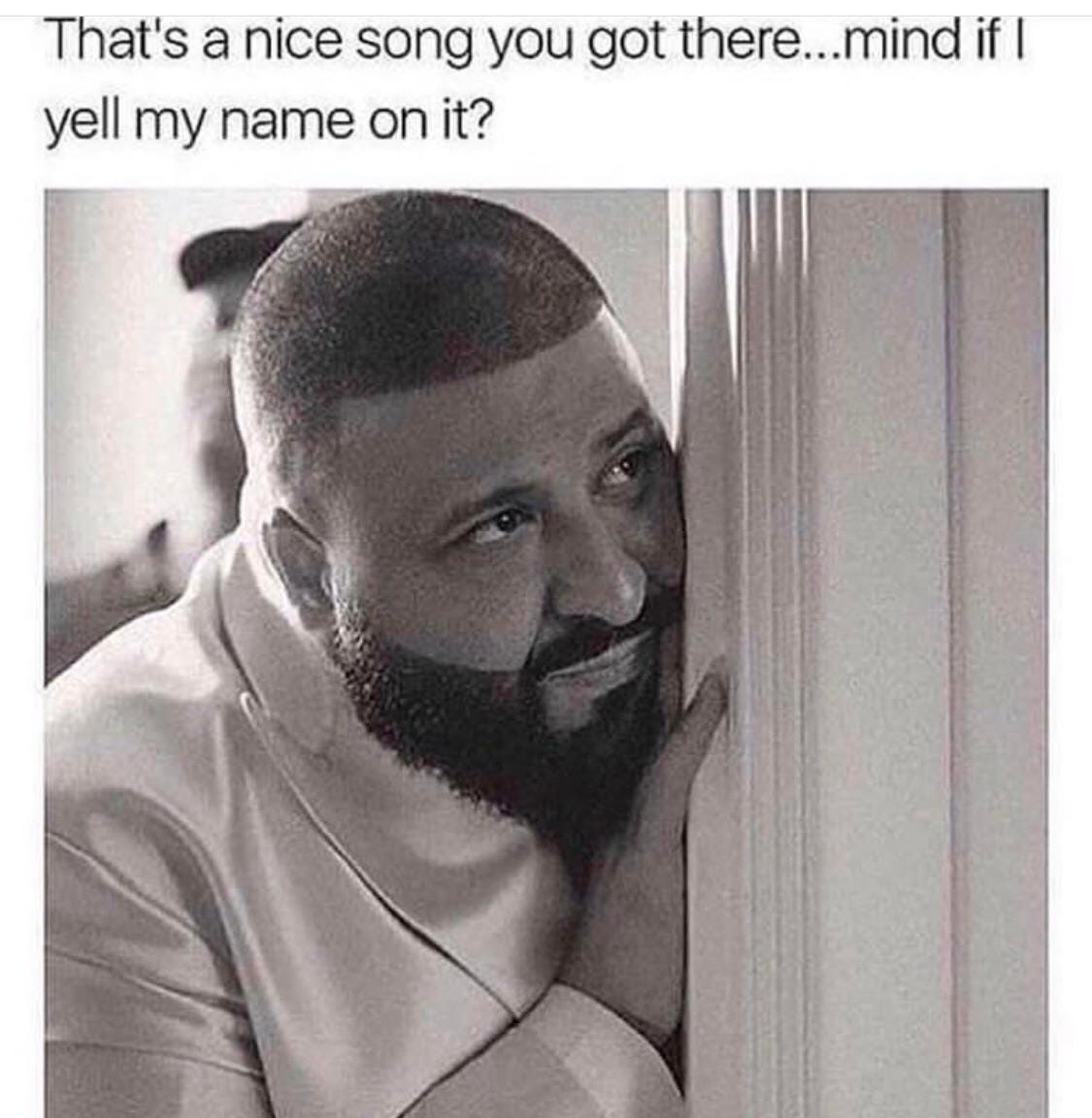
The first thing waiting for us in DJ Khaled’s backyard was a tray of drinks.
A guy from Khaled’s staff came over holding two glasses and told us they were “starfruit elixirs,” or something close enough to that that I have spent the last five years wondering whether I hallucinated the phrase.
I took a sip.
Hmm, not bad.
This was already not how most documentary meetings went for me. Usually you are in a conference room drinking an $8 bottle of Fiji or worse, a glass of lukewarm water because the production company has decided it is saving the planet by no longer offering plastic bottles.
Khaled’s Airbnb-style decor in his backyard (my footage)
Amman and I were ushered toward an outdoor table where lunch would eventually be served. We sat there for what felt like twenty minutes, though it was probably a completely normal amount of time to wait for a person who had a staff, a mansion, several luxury cars, a home-school situation in his front yard for his son and other kids and a full-time employee whose job was to make sure no one entered the backyard with unprotected sneakers.
Still, the longer we sat there, the stranger it felt. There was a nervousness in the air. Then DJ Khaled finally came outside.
I had arrived prepared to meet the guy from the Snapchat videos: the man who had convinced the internet that cocoa butter was a major key and “suffering from success” was a real medical condition.
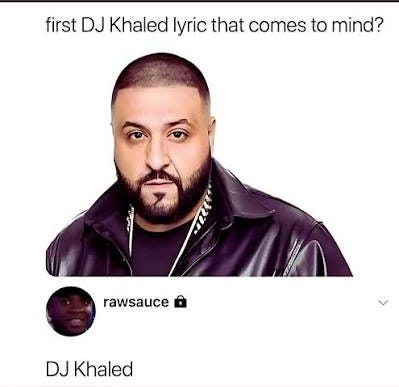
I expected the DJ Khaled who could walk through a garden, point at a flower, say “another one,” and make it feel like the Sermon on the Mount.
He was exactly what I expected him to be physically: big, commanding, fully DJ Khaled.
But emotionally, he was not what I expected.
I expected warmth. I expected jokes.
Instead, he came out guarded.
Serious.
Super suspicious.
There is a kind of old-school hip-hop posture I had encountered before: a refusal to give too much away, a need to make sure nobody in the room confuses openness with weakness. It is not even necessarily aggression but more like an early security system.
I had encountered that posture before with guys I had worked with: Jim Jones, Irv Gotti, and Ronald “Slim” Williams, who may be one of the most quietly terrifying people on the planet.
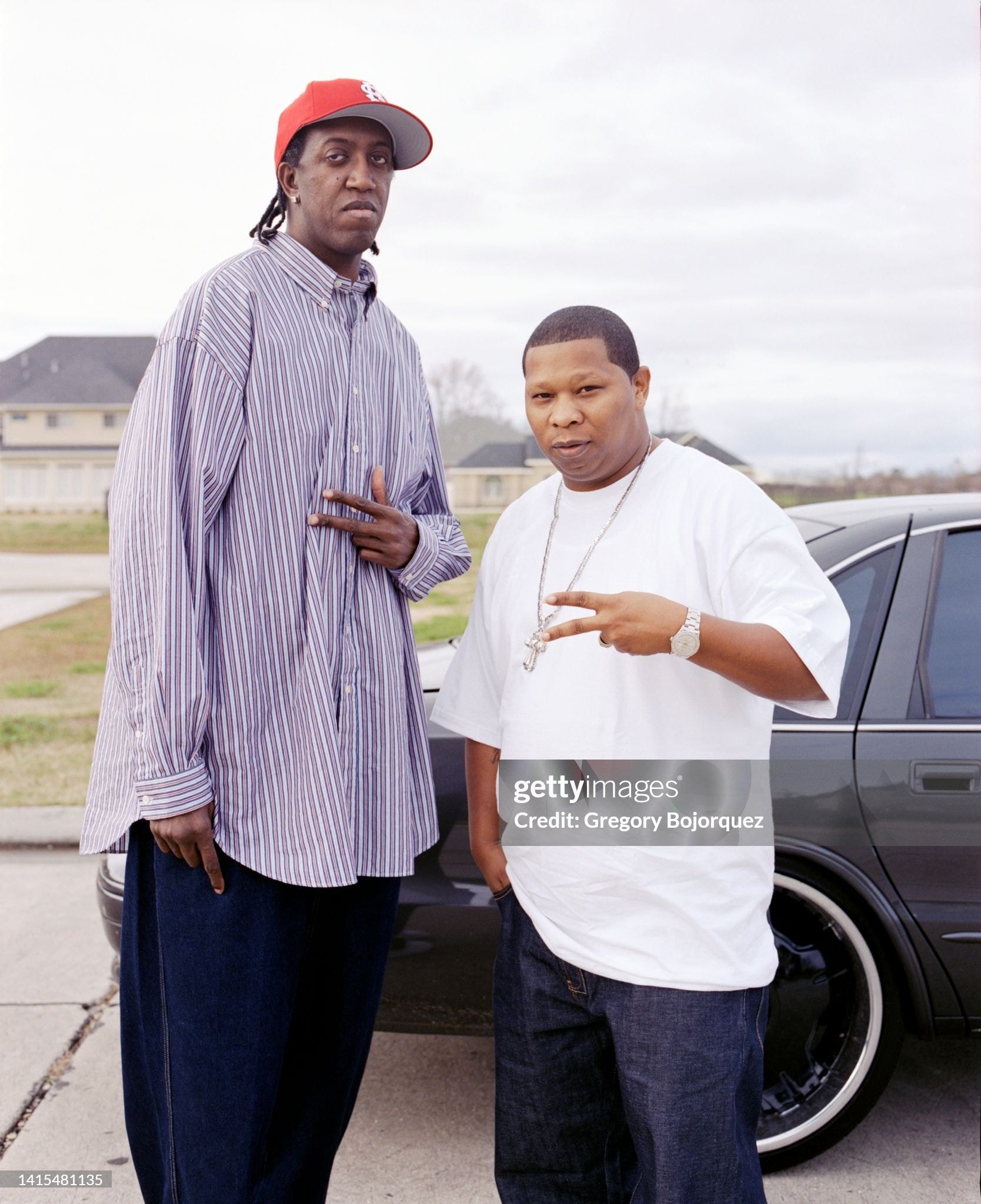
Ronald “Slim Williams on the left
Khaled had that energy.
Which threw me, because I had mistaken the public DJ Khaled the guy selling gratitude, joy, abundance, and Doritos for the person who would be sitting across from us at lunch.
That was my first mistake.
Amman and Khaled started making small talk. Khaled was being real, and unguarded. I had my DSLR hanging off my shoulder, and without thinking much about it, I took it out and started filming. This is something documentary filmmakers (and photographers too I suspect) do as a reflex. You are in the room. Something is happening. You think, Maybe this is the first scene. Maybe this ends up in the movie. Maybe, years from now, we will look back at this footage and laugh about the day we met.
Khaled looked at me.
“Why the fuck are you filming?”
I gave him the honest answer.
“Just in case we end up using it. Or needing it. This is our first meeting. Maybe it ends up in the film.”
He looked at me again.
“Why the fuck are you filming?”
The silence that followed had the exact energy of that Goodfellas scene where Joe Pesci asks Ray Liotta, “Funny how?”
Suddenly I understood that this was not a casual question, this was an exam. I could have doubled down on the truth. I could have explained documentary process, the value of capturing first impressions, the importance of spontaneous footage, why the entire thing might be useful one day. Instead, I panicked and tried humor.
“Cause I was hoping we could shoot a porno flick,” I said. “What the fuck?”
Khaled laughed.
Thank God.
The tension broke, at least technically. But I had learned something in that moment:. this was not a man casually considering a documentary because it sounded fun. This was a man trying to establish, immediately, that nobody was going to take anything from him without him understanding exactly what it was and why (and paying him a lot of money). And I had arrived with my camera already rolling.
That was my second mistake.
I had walked into Khaled’s backyard thinking I was there to have a fun discussion about a movie. He was trying to figure out whether I had already started making one.
From that point on, the meeting never really found a rhythm.
Everyone has been in one of these meetings before. Three or four people sitting around a table, all technically being polite, all trying to read each other, and everyone failing in real time. The energy is off the pauses are weird the jokes land in the wrong place the eye contact is either too much or not enough and you start wondering if maybe all your astrological signs are in total misalignment, or if the table itself has bad vibes.
At some point, there is a tiny voice in your head that wants to say, “Look, this meeting clearly isn’t going well. Why don’t we all just admit that, stand up, and walk away with whatever dignity we have left?”
But nobody ever does that.
So you keep going. You sip the starfruit elixir, nod and pretend momentum exists and the meeting slowly dies while everyone remains seated.
I stepped back and let Amman take over. He was calm, thoughtful, open. He talked about himself, his background, the self-help structure, the bigger idea. He explained why this would not be a standard music bio-doc and why we wanted to make something funny but real, why Khaled’s story had more depth than the public version of Khaled allowed people to see.
Then Amman asked him about his Palestinian background.
I think about this moment pretty differently today.
Back then, we weren’t sitting there under the weight of everything happening in Gaza. The endless stream of devasting news, displaced families and the heavy pressure on anyone with a mic to just say something, anything human. But looking back now I can’t really separate that day from everything that came after…
As far as I know, Khaled has never used his platform to speak up for Palestine in the way I’d hoped. Maybe I missed a post. Perhaps he does stuff quietly in private. But publicly? Nada. For a man who has always talked so proudly of his Palestinian roots, the silence stings.
But no, I wasn’t going to bring up the Gaza conflict right there in his backyard. Not while sipping a starfruit elixir in shoe booties.
Still, it hangs over how I remember the whole meeting because Khaled said he was “proud to be Palestinian.” But five years later, after watching him say nothing publicly when Palestine has needed every voice it can get (especially in hip hop), I cannot hear that sentence the same way.
“What if the movie ended with Khaled going back to Palestine?” - Amman offered. Not a solemn heritage-tourism montage. A real event. A concert. A homecoming. Something with the scale and emotional charge of Dave Chappelle’s Block Party, except it would be DJ Khaled returning to a place that had lived inside his identity more than it had existed in his actual life.
For the first time all afternoon, Khaled seemed to lean in. Or maybe I just desperately wanted him to. Either way, I felt the air shift.
Finally, I thought, we have found it…
Not just a funny DJ Khaled movie. Not just a self-help movie. A real ending, a journey and a reason for the film to exist beyond famous friends, expensive cars, old footage, and Khaled yelling motivational things at people from increasingly luxurious locations.
For thirty seconds, maybe a minute, I could see the whole documentary in front of my eyes, and I swore for a couple seconds Khaled could too-
Then the moment passed. Khaled pulled back. The energy flattened out. It was like he had allowed us one glimpse through a door, then closed it before either of us could get a foot inside and I began to realize that this would be the rhythm of the rest of this meeting.
He would give us just enough to keep us trying and then he would make sure we did not get too comfortable.
Every idea that had sounded exciting in our hotel room or over Zoom with his managers landed with some version of a shrug.
I had come to Miami expecting the standard celebrity-documentary conversation where everyone sits around a table talking about all the amazing things they are going to do together, says “full access” fifteen times, somebody mentions incredible old footage on VHS tapes or hard drives, some asshole says how “excited the agents are to take this out” everyone agrees the story is “awesome,” the team is ”impressive” and then nobody speaks again.
I would have happily taken that meeting, instead, I got something more confusing:
A DJ Khaled who seemed vaguely irritated that we had flown 2,340 miles just to see him, who had agreed to see us but did not appear especially interested in having us there and was listening just enough to make clear that he was not going to be charmed by the Danny McBride connection, my history as a hip hop documentarian, Amman’s enthusiasm, or our extremely good idea for a movie about himself.
And honestly, I got pissed off.
How had DJ Khaled surprise-attacked me?
I had flown across the country and thought I was bringing him something valuable, offering him a chance to make a movie unlike the boring, self-congratulatory celebrity documentaries that get announced every week and disappear before anyone actually watches them.
Instead I felt like maybe I had been summoned to his backyard so he could make me prove I deserved to be there (which, in retrospect, was exactly what the fuck was happening).
And then, almost as quickly as it had begun, the meeting was over. We wrapped up and he lumbered back into the house. Honestly I do not remember the meal. There may have been lunch served. There was technically a lunch table. But the whole thing had been so weird that my memory of the food has been erased by the sensation of being gently but unmistakably expelled from a very expensive atmosphere.
Amman went straight to the airport.
I went back to the hotel, bought a cheap bathing suit from a bodega on Collins Ave, and jumped into the ocean. That is one of the great emergency procedures of being a filmmaker. You have a confusing meeting with a celebrity in a backyard full of art objects and branded optimism, you go buy a bathing suit you will never wear again, and you let the Atlantic Ocean remove the smell of failure from your body.
I did not think the meeting had gone well. But I did what good producers do: I kept pursuing it.
Maybe Khaled would think about it while sitting in his jacuzzi late one night smoking a Montechristo and he would suddenly realize the project was good for him? And then the real conversation would start after the awkward first meeting.
That is the producer’s drug. Not the archive.
Hope.
And for a little while, hope kept the DJ Khaled documentary alive.
Then his team came back with the number.
Not a development budget.
Not a producer fee.
Not an ask for a percentage of the backend.
Twenty million dollars.
Next week: the number that ended the DJ Khaled documentary before it ever began and the question I still cannot completely answer: was Khaled trying to put a price on his life story, or was he giving us the most expensive no in documentary history?
Curious about my AI use? Read this:

Because this series deals with real projects, real people, and real companies, here’s the boring but necessary note:
Almost Greenlit is written from my personal perspective and memory as a filmmaker and producer involved in the development and pitching of these projects. It is not intended to be a definitive account of what any buyer, executive, company, filmmaker, subject, agent, financier, distributor, or other participant thought, intended, or decided at the time.
Where I describe meetings, pitches, passes, development history, business decisions, or creative choices, I am describing my own recollection, interpretation, and opinion unless otherwise stated. Any quoted material is included from my own correspondence, public materials, interviews, or with permission where appropriate.
Materials such as trailers, teasers, pitch decks, posters, stills, artwork, clips, screenshots, and other project-related assets may be included for commentary, criticism, historical context, archival reference, and educational purposes. I do not claim ownership of any third-party copyrighted material included or referenced here. Unless otherwise noted, photographs included in this series are my own or are used with permission.
Nothing in this series is intended to attack, disparage, or misrepresent anyone involved. The goal is to examine how projects are developed, pitched, passed on, revived, abandoned, or made anyway and what other filmmakers can learn from that process.
If anything here is inaccurate, incomplete, or requires correction, I’m happy to correct the record.
 | A guest post by
|